


From paper logbook to digital techlog: making hours and cycles reliable at the source
24 Novembre 2026
Most life-limit errors are not born in the CAMO office: they are born on the apron, in a logbook filled in at the end of the day from memory, or copied out three days later. Recording hours at the source, at the time of the flight, changes everything — and it is now within reach of every operator and every owner.

Where life-limit errors are born
A ten-hour error on a life-limited component is never a calculation error: it is an upstream entry error. A logbook filled in at the end of the day for several flights, forgotten cycles, an illegible figure, a page photographed and retyped by someone else, a sheet sent to the CAMO at month end… At every link, the data drifts from reality. And airworthiness tracking, however rigorous, can never be more accurate than the hours it is given.
For multi-owner fleets, flying clubs, rental operators and operators working from several bases, the problem multiplies with the number of hands writing in the logbook.
What the regulations accept
The technical log (or journey log, depending on the applicable framework) remains a mandatory operational document. European regulations do not require paper: records may be kept electronically provided the system guarantees the integrity of the data (no silent modification), its backup, its long-term legibility and its accessibility to the authority and to the continuing airworthiness management organisation. In other words, a digital technical log is acceptable if it does better than paper on evidence, not just on convenience.
The point to check with your authority or your CAMO is the description of the system in the organisation's manual: who enters data, who validates it, how corrections are traced, and how the document can be presented during an inspection.
What entry at the source changes
With a digital technical log, it is the pilot — or the aircraft owner — who records the flight at the end of it, on a phone or tablet: departure and arrival times, cycles, landings, remarks. The benefits are immediate:
- Time-stamping: the entry is dated at the moment it is made; it cannot be reconstructed afterwards without this being visible.
- Consistency checks: an arrival time before departure, a total lower than the previous one, a missing cycle are flagged before validation.
- Direct feed into tracking: hours and cycles reach the airworthiness software without retyping; due items are recalculated the same day.
- Visibility for everyone: the owner sees the hours on their aircraft, the CAMO sees the fleet's flights, the workshop sees the inspection coming.
- Traced flight remarks: an anomaly reported by the pilot becomes a tracked item, not a lost note.
TracingTime: entry by owners and pilots
This is exactly the role of TracingTime, the new module in the TracingFlight range: a simple application designed to be used beside the aircraft, which lets owners and pilots enter their hours and cycles and sends them directly to TracingNav for airworthiness tracking. Every entry is time-stamped, checked and validated by the organisation; corrections are traced; the log can be exported at any time for the authority.
For a CAMO, it is the end of month-end reminders and tedious reconciliations. For an owner, it is the certainty that their aircraft is tracked on accurate data.
See TracingTime in 10 minutes? Book a demonstration: we show you a flight being entered and arriving in airworthiness tracking, live.
-
-

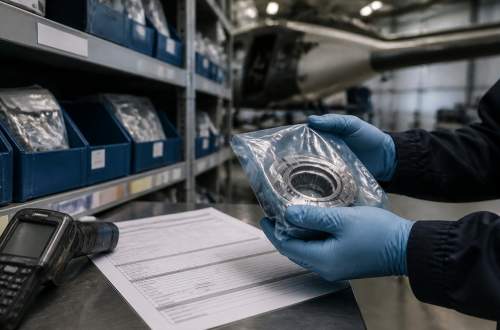
Your CAMO audit (national authority / EASA): the checklist to walk in ...
-
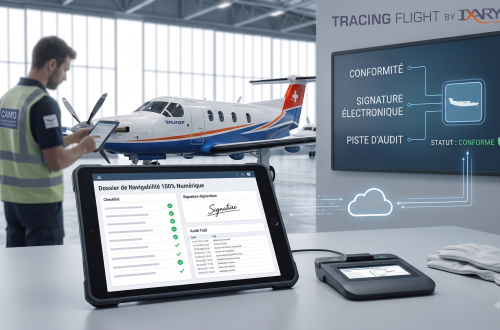
The 100% digital airworthiness record: compliance, electronic ...
-
Part-IS: cybersecurity is no longer optional, it is a regulatory ...
-
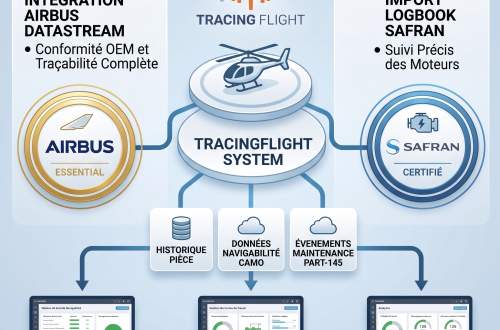
Why Airbus and Safran certify our data processes with TracingFlight
-
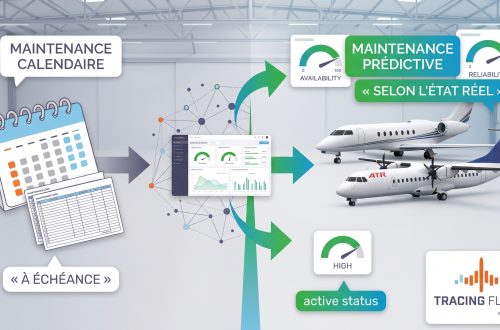
From calendar-based to predictive maintenance: what data changes ...
-
Performance · Availability
-

Buying guide · CAMO
-
Airworthiness · Regulation
-

Tracing Flight & Nexess