

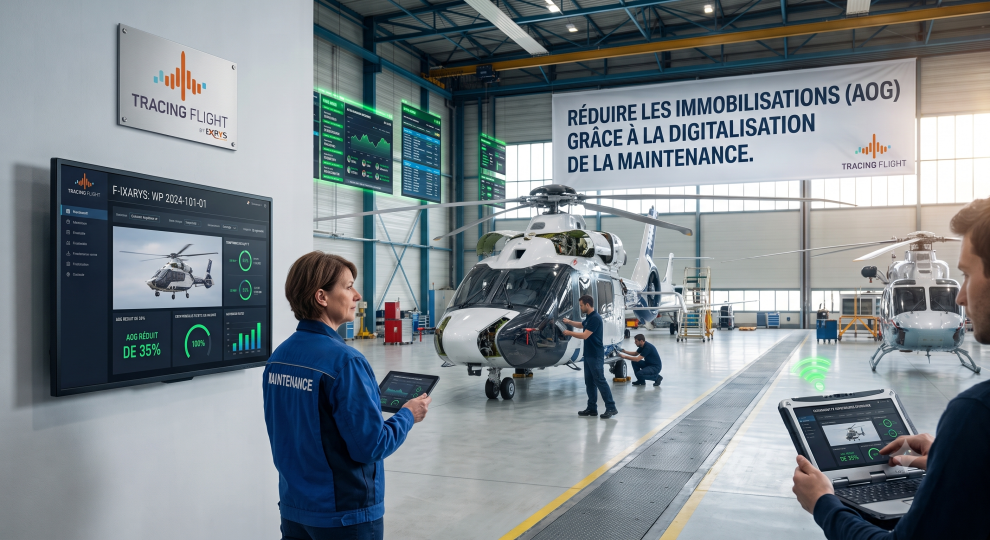
Concretely, where to start?
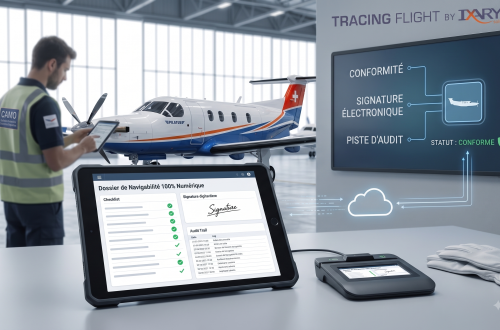
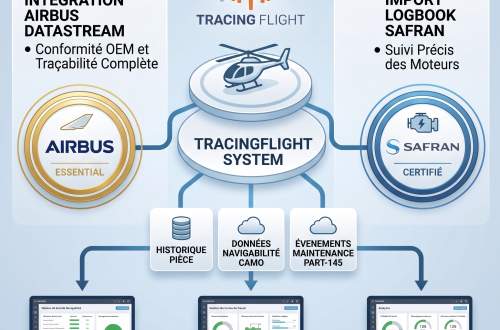
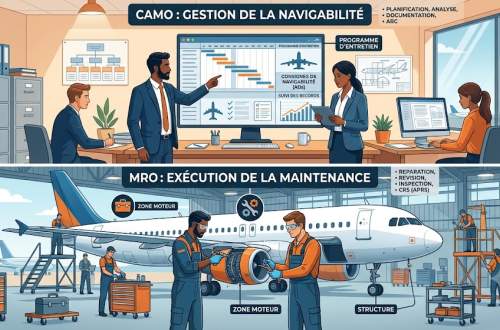
No need to transform everything at once. The most profitable is to start with airworthiness tracking and due-date alerts – that is where most avoidable groundings are decided – then extend to workshop management and documentation. This is the logic of the TracingFlight suite: TracingNav to anticipate groundings, TracingLine to optimise the workshop, TracingDocs for documentation – three interconnected building blocks.
How many groundings could you avoid?
See in 30 minutes how to anticipate your due dates and make your availability reliable.
Request a demoFrequently asked questions
What is an AOG in aviation?
AOG means "Aircraft On Ground": an aircraft grounded and unavailable for operations, usually because of a technical or maintenance problem. An unplanned AOG generates direct costs (parts, labour, emergency shipping) and above all indirect costs (cancelled flights, replacement aircraft).
How does maintenance software reduce groundings?
By turning suffered groundings into planned maintenance: automatic due-date alerts, anticipation of potentials, tracking of life-limited parts, centralised documentation and interconnection between airworthiness and workshop reduce waiting times and errors.
Should all maintenance be digitalised at once?
No. The most effective approach is to start with airworthiness tracking and due-date alerts, where avoidable groundings are concentrated, then gradually extend to workshop management and documentation.
What is the difference between preventive and predictive maintenance?
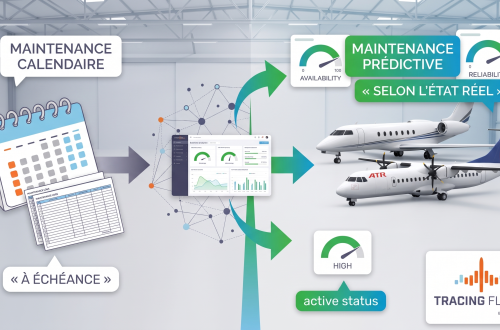
Preventive maintenance follows a calendar or potentials set in advance; predictive maintenance uses actual operating data to detect weak signals and intervene at the optimal moment, further reducing unplanned groundings.