
Need assistance?
+33 (0)4 810 600 00 Contact us

Airworthiness · Regulation

18 Juillet 2026

CAMO or MRO? Roles, differences and regulatory obligations. Two complementary organisations, two distinct responsibilities. How CAMO and MRO fit together in the EASA framework – and what it concretely means for managing your fleet.

In aviation, safety rests on a clearly separated chain of responsibilities. At the heart of this chain, two acronyms come up constantly: CAMO and MRO. They are often confused, although they refer to two different trades – one manages airworthiness "on paper" and over time, the other physically performs the maintenance. Understanding this distinction is the first step in organising the tracking of an aircraft effectively.

CAMO: managing continuing airworthiness

A CAMO (Continuing Airworthiness Management Organisation) is responsible for the continuing airworthiness of an aircraft, without carrying out the physical maintenance operations itself. It is the technical and documentary "conductor".

Its main tasks

  • Drawing up and keeping up to date the maintenance programme of each aircraft;
  • Analysing the applicability of airworthiness directives (AD) and service bulletins (SB);
  • Supervising technical records and the complete history of hours and cycles;
  • Planning maintenance due dates and coordinating the dispatch of the aircraft to the workshop;
  • Where applicable, issuing the ARC (Airworthiness Review Certificate).

The applicable European regulatory framework is EASA Part-M, now supplemented by Part-CAO (Combined Airworthiness Organisation), which allows the organisations concerned to combine airworthiness management and light maintenance under a single approval.

MRO / Part-145: performing the maintenance

An MRO (Maintenance, Repair & Overhaul) – also called an approved maintenance organisation – is certified to physically carry out maintenance, repairs and modifications on aircraft and their components. It is the workshop that "gets its hands in the engine".

Its typical activities

  • Scheduled inspections (A-Check, C-Check…);
  • Corrective maintenance and troubleshooting;
  • Structural repairs and modifications;
  • Non-destructive testing and tests;
  • Issue of the CRS (certificate of release to service) at the end of the work.

The applicable framework is EASA Part-145 (equivalent to FAR Part 145 on the FAA side).

CAMO vs MRO: the comparison table

Criterion CAMO MRO (Part-145)
Role Manage continuing airworthiness Perform maintenance
EASA framework Part-M / Part-CAO Part-145
Nature of the work Planning, analysis, documentation Physical intervention on the aircraft
Key document issued ARC (airworthiness review) CRS (release to service)
Analogy The GP who follows the patient file The surgeon who operates

Can you be both?

Yes. Many organisations hold several approvals – the same operator may have a CAMO and a Part-145 workshop, or opt for a combined Part-CAO approval. In all cases, the separation of responsibilities must remain traceable: airworthiness management and maintenance execution remain two distinct functions, even under the same roof.

Why this distinction changes everything on the software side

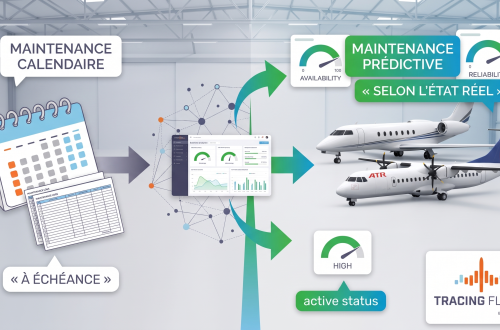
Because the two trades handle different but interdependent data. The CAMO thinks in maintenance programmes, potentials, due dates and regulatory status; the MRO thinks in work orders, workshop resources, parts and downtime. If these two worlds live in separate files, information is lost at every exchange – and that is where errors and delays are born.

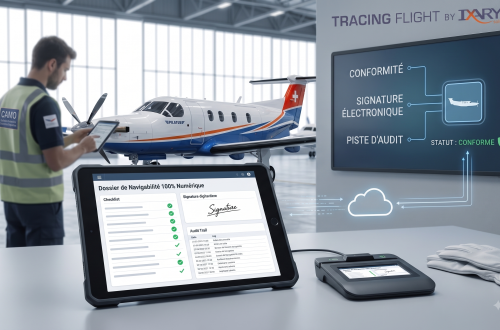
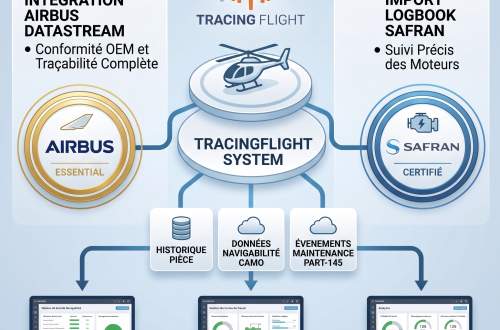
A solution that interconnects airworthiness, maintenance and documentation removes these breaks: the work order generated on the CAMO side feeds the workshop directly, potentials are recalculated when the inspection is closed, and technical documentation stays attached to the aircraft throughout its life. This is precisely the logic of the TracingFlight suite, with TracingNav (CAMO), TracingLine (MRO) and TracingDocs (document management) designed to communicate natively.

Do you combine airworthiness management and maintenance?

Find out in 30 minutes how TracingFlight links your CAMO and MRO activities.

Request a demo

Frequently asked questions

What is the main difference between CAMO and MRO?

The CAMO manages the continuing airworthiness of an aircraft (planning, analysis of directives, documentation) without performing maintenance; the MRO physically carries out maintenance and repairs. The former comes under EASA Part-M/Part-CAO, the latter under Part-145.

What is Part-CAO?

Part-CAO (Combined Airworthiness Organisation) is an EASA framework allowing an organisation to combine, under a single approval, continuing airworthiness management and certain maintenance activities, to simplify the structure for general aviation and light fleets.

Can the same organisation be both CAMO and MRO?

Yes. An organisation can hold a CAMO approval and a Part-145 approval at the same time, or choose the combined Part-CAO. Traceability between airworthiness management and maintenance execution must nevertheless be ensured.

Which document does a CAMO issue, and which does an MRO issue?

The CAMO issues the ARC (Airworthiness Review Certificate). The MRO issues the CRS (certificate of release to service) after the work has been carried out.